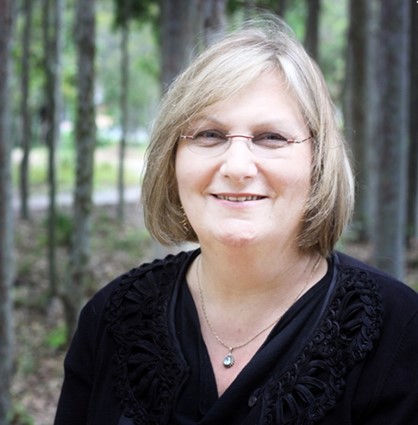
Rachael was admitted to practise as an Attorney in Australia on 11th July, 1980. She practised law continuously since that time until she retired on 30th July, 2023.
Rachael attained the professional status of Accredited Specialist (Family Law) as awarded by the Law Society of New South Wales (Australia).
Rachael has post graduate qualifications in Collaborative Law, has lectured in Family Law and Wills & Estates law at the University of Newcastle and has appeared as counsel in appeal proceedings before the Full Court of the Family Court of Australia.
Rachael was admitted to practise as an Attorney in Australia on 11th July, 1980. She practised law continuously since that time until she retired on 30th July, 2023.
Rachael attained the professional status of Accredited Specialist (Family Law) as awarded by the Law Society of New South Wales (Australia).
Rachael has post graduate qualifications in Collaborative Law, has lectured in Family Law and Wills & Estates law at the University of Newcastle and has appeared as counsel in appeal proceedings before the Full Court of the Family Court of Australia.
Now retired from legal practice I’m writing of story of Allia – a Gallae priestess of the goddess, Cybele, – an ancient Anatolian goddess known in ancient Rome as the Magna Mater or Great Mother.
Allia’s story begins with her birth to a privileged Roman family in Rome in the late 4th Century CE and follows her life in the service of the Magna Mater as a Gallae priestess against the backdrop of the Christian persecution of non-Christian faiths amidst the disintegration of the Western Roman empire in the last decades of the 4th Century CE and the early decades of the 5th.
Gallae priestesses of the Magna Mater were people born male bodied who in dedication to the Great Mother affirmed their female sex/gender and underwent a form of genital reassignment procedure to live exclusively as women for the rest of their lives. The religion of the Magna Mater thus provided an institutional role for the ancient Roman equivalent of people we might call transsexual or trans.
Now retired from legal practice I’m writing of story of Allia – a Gallae priestess of the goddess, Cybele, – an ancient Anatolian goddess known in ancient Rome as the Magna Mater or Great Mother.
Allia’s story begins with her birth to a privileged Roman family in Rome in the late 4th Century CE and follows her life in the service of the Magna Mater as a Gallae priestess against the backdrop of the Christian persecution of non-Christian faiths amidst the disintegration of the Western Roman empire in the last decades of the 4th Century CE and the early decades of the 5th.
Gallae priestesses of the Magna Mater were people born male bodied who in dedication to the Great Mother affirmed their female sex/gender and underwent a form of genital reassignment procedure to live exclusively as women for the rest of their lives. The religion of the Magna Mater thus provided an institutional role for the ancient Roman equivalent of people we might call transsexual or trans.
LANDMARK CASES
RE KEVIN
Rachael represented the successful Applicant Husband and Wife in the case Re Kevin (validity of marriage of transsexual) [2001] FamCA 1074 (“Re Kevin”) and upon appeal to the Full Court of the Family Court of Australia in the case The Attorney-General for the Commonwealth v “Kevin and Jennifer” and Human Rights and Equal Opportunity Commission (2003) 30 Fam LR 1 where Rachael’s clients succeeded against the Attorney General for the Commonwealth of Australia in proceedings in the Family Court of Australia during the Howard Government era in obtaining a Declaration of the Validity of a Marriage between a man of transsexual background and his wife; with the husband recognised as a man for the purposes of Australia’s marital law.
Re Kevin has been relied upon as a precedent internationally; including in the European Court of Human Rights and in courts in the United States of America. Both decisions are discussed in Rachael’s paper Re Kevin in Perspective’ (2004) 9 Deakin Law Review 461 accessible at http://www5.austlii.edu.au/au/journals/DeakinLawRw/2004/22.html
That paper was referenced by the then Family Court Chief Justice in her judgement in Re Jamie [2013] FamCAFC 110 that followed Rachael’s clients first succeeding in 2005 and 2007 judgements in Re: Bernadette (Special Medical Procedure) [2010] Famca 94 in obtaining respective court approvals for Phase 1 (puberty suspension) and Phase 2 (affirmed puberty) hormonal treatment for an Australian adolescent – while seeking a declaration that young Australians should be able to receive such therapeutic medical treatment without court approval.
To receive information about Rachael’s forthcoming book, please enter your details below: